The UN supports Haiti for the protection of the environment
On the occasion of World Environment Day on June 5, the United Nations in Haiti reiterate its support to the country in its efforts to increase good environmental practices capable of slowing down the accelerated degradation of the environment, by meeting commitments of Haiti for the Sustainable Development Goals (SDGs) by 2030 and the Paris Agreement on climate change. According to the UN, these objectives are crucial to strengthen the resilience of Haitians through better management of resources and adaptation to natural phenomena. This year, the global theme for the day is “bringing people closer to nature”, which highlights the need to strengthen education for nature conservation. In this regard, various UN entities, such as UNEP, FAO, UNDP and MINUSTAH, organize awareness-raising activities in collaboration with the Haitian authorities and partners. “The Sustainable Development Goals and the Paris Agreement are much more than Haiti’s commitment to a United Nations agenda. It is about Haiti’s commitment with its children and grandchildren for a better future. Haiti has set itself the goal of being an emerging country by 2030. It is possible and the UN will be alongside Haiti on this path ”, underlined the United Nations Resident Coordinator in Haiti, El- Mostafa Benlamlih.
T he United Nations experts in Haiti draw attention to the fact that responsible management of the environment at the institutional level, regional planning and environmental protection at community level are essential for Haiti’s economic and social development and for the implementation of all 17 Sustainable Development Goals, since they are all interdependent. Indeed, pollution and unsustainable exploitation of terrestrial and marine ecosystems weaken economic alternatives (in particular tourism, agriculture, fishing and energy) and aggravate the risks of extreme poverty, the deficiencies of the systems of access to water,
sanitation and waste management, the risk of water-borne diseases, energy poverty and the vulnerability of the population to natural disasters. Biodiversity is also affected, and 19% of all species are threatened with extinction in Haiti.
This conjunction of factors is also added to the massive and uncontrolled urbanization in high-risk areas (especially on the coast) where the adequate conditions are not met and which do not do not meet construction standards. According to the UNDP report on the Millennium Goals in Haiti, the population living in houses that do not meet the minimum conditions (slums) has almost doubled in the last two decades in Haiti and at least 74% of households live in these spaces. . This approach to environmental protection is crucial for a sustainable recovery of the areas affected by Hurricane Matthew in October 2016.
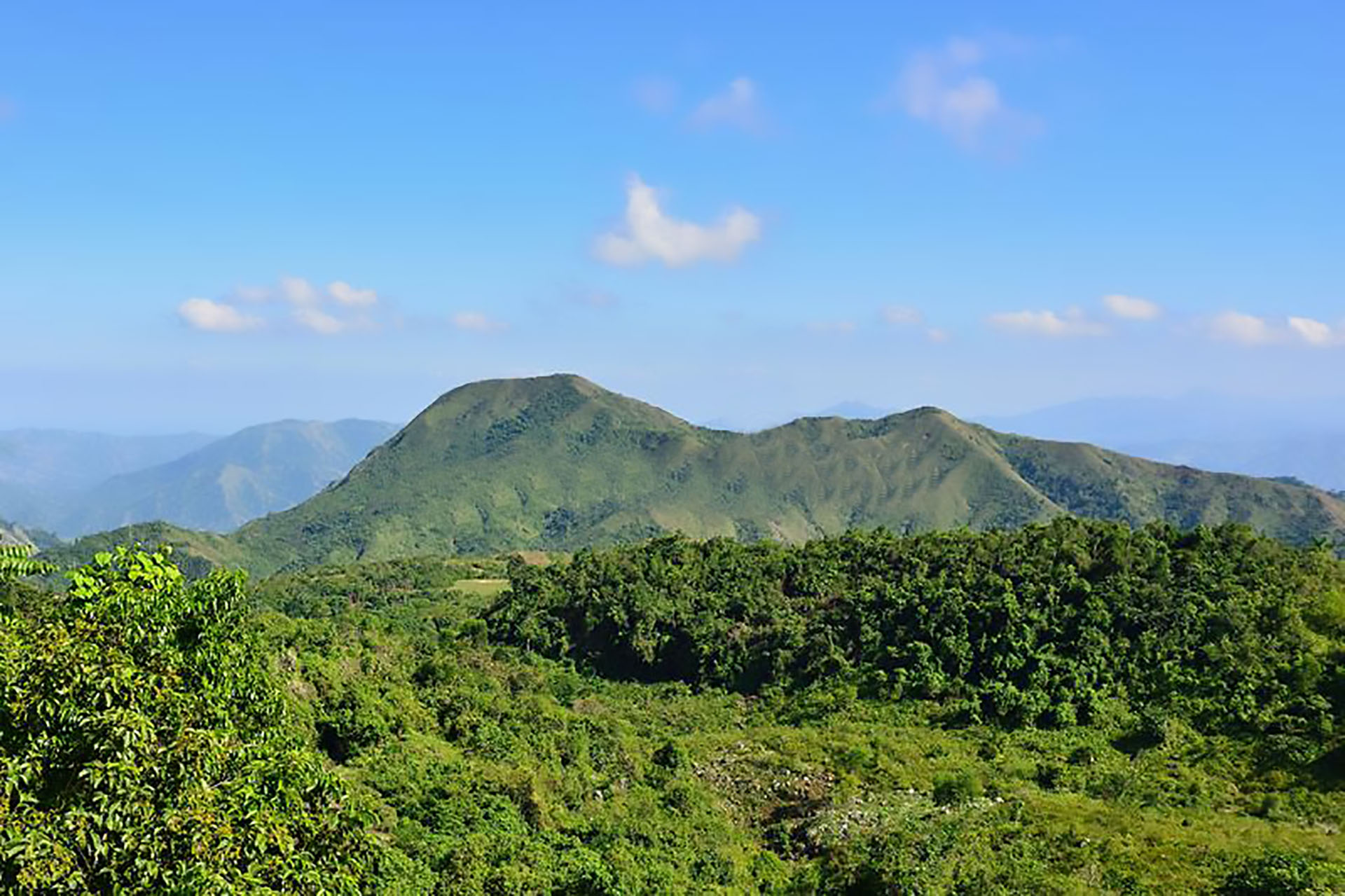
D eforestation is one of the problems that most worries United Nations experts, since it accelerates soil erosion and the decrease in rainfall, factors linked to the 3 years drought exacerbated by the El Niño phenomenon and by climate change. This situation has resulted in the loss of up to 70% of crops, the increase in the prices of basic food products and the lack of work opportunities in the agricultural sector, as well as the increase in the number of food insecure people. in Haiti (3.6 million including 1.5 million suffering from severe food insecurity), This degradation also reduces access to water in a country where 42% of the Haitian population still does not have safe access to water. drinking water and 72% do not have adequate sanitation.
The UN also stresses that the vegetation cover is very low in Haiti, even if the lack of updated data does not allow to determine with exactitude the rate. One of the factors that contribute to deforestation is the cutting of trees for the production of charcoal, which in 2012 was used in 92% of Haitian households for cooking. According to the FAO, 10,000 bags of charcoal are consumed per day in the country.
In addition, the erosion of sols greatly increases the vulnerability of populations to natural disasters, particularly cyclones, bad weather and earthquakes.
Once again, United Nations studies warn that the poorest women and households are disproportionately affected by environmental degradation, especially rural households with a woman as head of household, since ‘they primarily suffer from the drop in agricultural yields caused by the consequences of deforestation. . In response, the United Nations is encouraging national efforts to produce more with less increasing efficiency, the conservation of natural resources and the restoration of degraded lands through better agroforestry, environmental and agroecological practices, as well as the conservation of local varieties. . These practices would allow the reduction of post-harvest losses of agricultural products (currently around 30-40%, according to the Ministry of Agriculture MARNDR).
Despite the gravity of the situation, the Haitian Government, supported by its partners, has taken actions to slow down the degradation of the environment and mitigate the resulting risks, such as:
• The signing of United Nations conventions such as the Biological Corridor in the Caribbean (CBC), the United Nations Convention to Combat Desertification (UNCCD) and the United Nations Framework Convention on Climate Change (CCNUC)
• The creation of new protected areas including the first marine areas in the South and in the North
• The delimitation of the National Parks of Macaya, La Visite and the Pine Forest
• The creation of the La Selle Biosphere Reserve
• The establishment of Protected Areas management structures such as the National Agency for Protected Areas (ANAP) and the deployment of the Surveillance Corps in Protected Areas.